
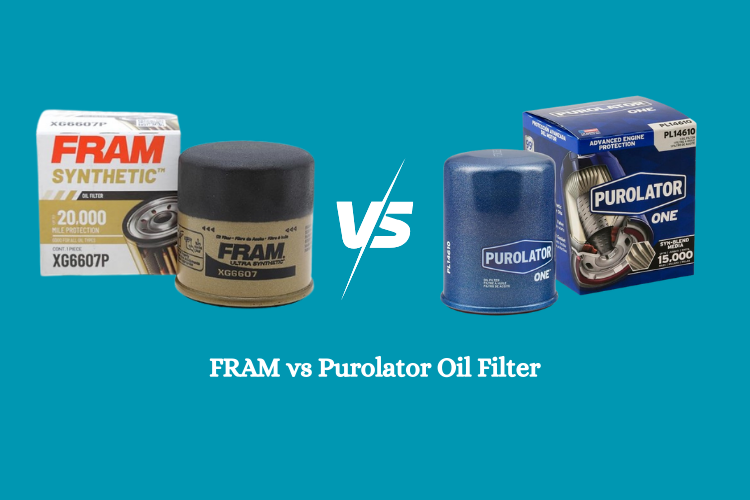
Maintaining engine health starts with the right oil filter. FRAM and Purolator dominate the market, each offering unique benefits for drivers who demand reliability. FRAM filters often attract attention for their affordability and ease of installation, making them a favorite for quick maintenance.
Purolator focuses on advanced filtration technology, designed to trap tiny contaminants and protect engine components over long distances. Understanding the differences between these two brands helps drivers make smarter choices that match their vehicle’s needs and driving style.
Durability, efficiency, and overall performance vary depending on oil type, driving conditions, and maintenance schedule. Comparing features like filter media, pressure tolerance, and lifespan reveals which option delivers better protection for specific engines.
Engine longevity relies on consistent filtration performance, making this decision more than a routine purchase. FRAM and Purolator each promise benefits, but analyzing their strengths clarifies which filter offers the most value for your car.
FRAM Oil Filter vs Purolator Oil Filter
Oil filters are critical for engine health. They prevent metal particles, dirt, carbon, and other debris from circulating in the engine oil. Over time, these contaminants can damage bearings, pistons, and cylinder walls.
Choosing the wrong filter reduces oil efficiency and engine lifespan. FRAM and Purolator are two top brands, each with unique design, media, and performance features. Understanding the details helps you make an informed choice.
FRAM Oil Filter
About this Product
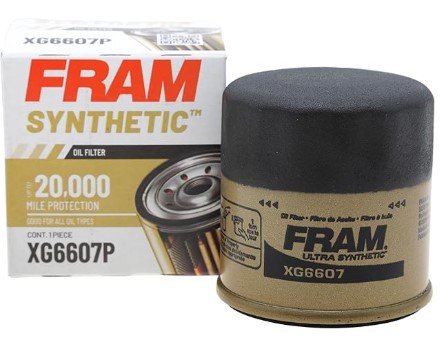
The FRAM XG6607P is engineered for synthetic oil use, providing extended protection for modern cars and trucks. It uses advanced synthetic media and durable components to handle high-mileage use and extreme operating conditions. The filter is suitable for drivers who travel long distances, face stop-and-go traffic, or tow heavy loads.
Features
-
Dual-Layer Synthetic Media:
FRAM uses a two-layer media system. The outer layer captures larger particles, while the inner layer traps finer contaminants. Laboratory testing shows it removes over 99% of particles as small as 23 microns, which helps reduce engine wear. -
Silicone Anti-Drainback Valve:
This valve prevents oil from draining out of the filter when the engine is off. It maintains oil at critical points, reducing dry-start wear by up to 3x compared to standard filters. -
SureGrip Installation:
The textured surface makes it easy to screw on or off, even with greasy hands. This design reduces installation errors and oil spills. -
Heat-Resistant Gasket and Poppet:
The high-nitrile gasket resists degradation at temperatures above 250°F, ensuring the filter maintains a seal under extreme engine heat. -
20,000-Mile Service Interval:
FRAM XG6607P is rated for up to 20,000 miles with synthetic oil, which is higher than most conventional filters.
What is the good?
-
Excellent particle capture for clean engine oil.
-
Durable under high temperatures and extended mileage.
-
Anti-drainback valve reduces startup wear.
-
Easy DIY installation with SureGrip.
-
Reliable for long-haul drivers or heavy-duty use.
What is the bad?
-
Best performance requires synthetic oil.
-
Slightly bulkier design may not fit very compact engine bays.
-
Price is higher than entry-level filters.
Best For
Drivers who want extended mileage, synthetic oil compatibility, and maximum engine protection, particularly in high-heat or high-mileage conditions.
Purolator PL14610 Oil Filter
About this Product
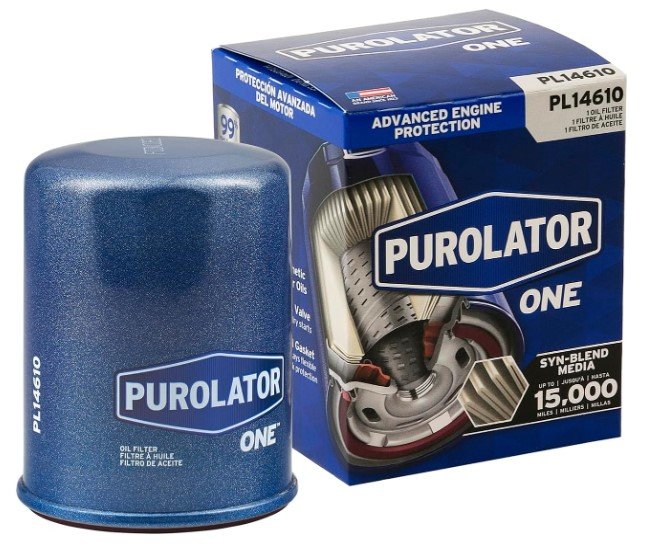
Purolator’s PL14610 focuses on engine protection with synthetic blend media, balancing cost, performance, and versatility. It is compatible with a wide range of vehicles including Honda, Nissan, and Acura. The filter is engineered for engines that require consistent oil flow and leak-free installation.
Features
-
High-Density Synthetic Blend Media:
Purolator uses a single-layer synthetic blend that captures over 99% of particles as small as 25 microns. It has high dirt-holding capacity, allowing up to 15,000 miles between oil changes. -
Silicone Anti-Drainback Valve:
Keeps oil in the filter while the engine is off, preventing dry starts and reducing startup wear. -
PTFE-Treated Gasket:
Heat-resistant, flexible gasket ensures leak-free installation. It maintains integrity under temperatures up to 230–250°F. -
Durable Construction:
Metal end caps and a reinforced center tube resist collapse under pressure. The double-helix design improves oil flow, even in heavy-load or high-temperature scenarios. -
Versatile Vehicle Fit:
Compatible with multiple car and truck models, making it suitable for drivers with varying vehicles.
What is the good?
-
Strong dirt-holding and filtration efficiency.
-
Silicone anti-drainback valve protects engine at startup.
-
Leak-proof gasket ensures no oil seepage.
-
Durable construction for high-pressure use.
-
Suitable for a wide range of vehicles.
What is the bad?
-
Maximum service interval (15,000 miles) is lower than FRAM’s 20,000 miles.
-
Slightly more expensive than basic filters with shorter lifespan.
-
Best used with synthetic or blended oil; long-term heavy-duty use may be less optimal than FRAM.
Best For
Drivers seeking reliable protection across multiple vehicle types, with leak-proof performance and synthetic/blend oil compatibility.
Technical Comparison for FRAM vs Purolator Oil Filter
| Feature | FRAM XG6607P | Purolator PL14610 |
|---|---|---|
| Filtration Media | Dual-layer synthetic | High-density synthetic blend |
| Dirt Capture | >99% at 23 microns | >99% at 25 microns |
| Anti-Drainback Valve | Silicone | Silicone |
| Oil Change Interval | 20,000 miles (synthetic) | 15,000 miles (synthetic/blend) |
| Gasket | High-nitrile, heat-resistant | PTFE-treated, leak-proof |
| Construction | Resin media, steel casing | Metal end caps, double-helix center tube |
| Temperature Tolerance | Up to 250°F+ | Up to 230–250°F |
| Vehicle Fit | Car, truck, high-mileage | Multiple car/truck models |
| Installation | SureGrip non-slip | Standard spin-on, leak-proof |
Insights from Data
-
Filtration Efficiency: FRAM slightly outperforms Purolator in fine particle capture (23 microns vs 25 microns). This is critical for modern engines with tighter tolerances.
-
Oil Change Interval: FRAM supports longer intervals due to dual-layer media and synthetic optimization. Purolator is still strong but shorter.
-
Durability: Purolator focuses on structural integrity (metal end caps, reinforced tube), while FRAM emphasizes heat resistance and valve performance.
-
Installation: FRAM’s SureGrip makes DIY installation easier. Purolator’s PTFE gasket ensures leak-free operation but may require careful hand-tightening.
FAQs
Can I use FRAM XG6607P instead of Purolator?
Yes, if thread size and fitment match your engine. Always verify compatibility before installation.
Which lasts longer?
FRAM supports up to 20,000 miles with synthetic oil. Purolator lasts up to 15,000 miles.
Do both support synthetic oil?
Yes. FRAM is optimized for full synthetic. Purolator works with synthetic and blended oils.
Which is better for high-heat environments?
FRAM has higher heat-resistant media and gaskets, making it more stable under prolonged high engine temperatures.
Are both easy to install?
Yes, both are spin-on filters. FRAM adds a non-slip SureGrip feature. Purolator uses a PTFE gasket for secure sealing.
Conclusion
FRAM XG6607P and Purolator PL14610 both offer strong engine protection but target slightly different needs.
-
FRAM excels in long-distance, high-mileage, and high-temperature conditions, especially with synthetic oil.
-
Purolator provides versatile fitment, leak-proof operation, and reliable protection for a range of vehicles, ideal for drivers who prefer shorter oil change intervals or synthetic/blend oils.
Recommendation: Choose FRAM for extended mileage and heat resistance. Choose Purolator for versatility, structural durability, and leak-proof performance.