
Many car owners ask one simple question during an oil change: should I put oil in my oil filter before installing it? This small step can affect engine protection, oil pressure, and long-term performance. Some mechanics always pre-fill the filter, while others skip it without worry.
Confusion grows because engines differ in design, filter position, and oil flow system. A vertical filter may benefit from pre-filling, but a horizontal filter can spill oil and create a mess.
Modern engines also build oil pressure quickly, which changes the need for this step. Clear facts help you protect your engine and avoid mistakes.
This guide explains what happens inside your engine at startup and how pre-filling may help or hurt. Smart maintenance decisions extend engine life and reduce wear. Let’s break down the facts in simple terms so you can decide with confidence.
Should I Put Oil in My Oil Filter Before Installing?
Many drivers ask the same question during an oil change. Should I put oil in my oil filter before installing it? Some mechanics say yes. Others say no. Both sides have reasons.
This topic may sound small. Still, it connects to engine wear, oil pressure, and long-term durability. A few seconds at startup can affect metal parts inside the engine. Those parts move fast. They depend on oil.
This guide explains the topic in deeper detail. You will understand how oil pressure works. You will learn how filter design matters. You will see real mechanical reasons behind both choices.
How Engine Oil Pressure Works?
An engine has many moving parts. Pistons move up and down. Crankshaft spins. Camshaft opens and closes valves. All these parts create friction. Oil reduces that friction.
Oil Pump and Flow
The oil pump pulls oil from the oil pan. It pushes oil through:
-
Oil pump
-
Oil filter
-
Oil passages inside the engine
Oil pressure usually ranges between 20 to 60 PSI in most passenger cars. Cold engines often show higher pressure. Warm engines show lower pressure.
Oil must pass through the filter before reaching bearings. If the filter stays empty, the pump fills it first. That creates a short delay.
What Happens During Engine Startup?
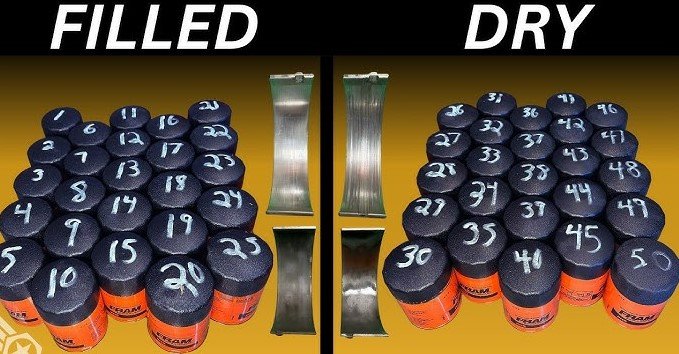
Startup is the most critical time for engine wear.
Here is what happens:
-
Engine parts start moving immediately.
-
Oil pump begins pushing oil.
-
Oil pressure takes a few seconds to build.
During this short time, metal parts may touch more than normal. Engineers call this “boundary lubrication.” Oil film has not fully formed yet.
Studies in automotive engineering show that a large part of engine wear happens during cold starts. That does not mean damage happens every time.
It means wear increases slightly during this period. Pre-filling the oil filter may reduce this delay by a small amount.
How Much Oil Does a Filter Hold?
Oil filter size matters.
Small car filters usually hold:
-
0.2 to 0.5 liters of oil
Large diesel truck filters may hold:
-
0.7 to 1 liter or more
Bigger filters take longer to fill. That means a longer delay before oil reaches engine bearings.
- In small engines, the delay may last 2–3 seconds.
- In large engines, the delay may last slightly longer.
Pre-filling reduces that time.
Internal Design of an Oil Filter
Oil filters contain more than just paper.
Inside the filter:
-
Filter media traps dirt.
-
A bypass valve opens if pressure becomes too high.
-
An anti-drainback valve prevents oil from flowing backward.
Anti-Drainback Valve
Many modern filters include a rubber anti-drainback valve. This valve keeps oil inside the filter after the engine shuts off. This design already reduces dry starts.
If your filter has a strong anti-drainback valve, pre-filling becomes less important. Older engines or cheap filters may not perform as well. In those cases, pre-filling may help slightly.
Real Benefit of Pre-Filling
Pre-filling offers one main benefit: Faster oil delivery to engine bearings.
Bearings support the crankshaft. These parts spin at high speed. Even at idle, the crankshaft may spin around 700 to 900 RPM. At highway speed, it may spin over 2,000 RPM.
Oil creates a thin protective film between metal surfaces. That film prevents direct metal contact. Pre-filling reduces the time required to create that film during first startup after an oil change.
The benefit stays small for most daily cars. It becomes more meaningful in:
-
High mileage engines
-
High performance engines
-
Large diesel engines
-
Vehicles under heavy load
Situations Where Pre-Filling Helps More
1. Large Capacity Engines
Engines with 6, 8, or more cylinders often use larger filters. Oil system volume stays higher. Pre-filling helps reduce pressure delay.
2. Engines With High Oil Pressure Demand
Turbocharged engines rely on oil for turbo lubrication. Turbo shafts spin at very high speed. Quick oil supply protects them.
3. Fleet or Commercial Vehicles
Vehicles that operate long hours benefit from extra caution. Small protective steps add up over time.
Situations Where Pre-Filling Makes Little Difference
1. Small Modern Passenger Cars
Most small engines build pressure quickly. The pump design handles normal oil changes.
2. Horizontal or Upside-Down Filters
Oil spills out during installation. Dirt may enter the filter. Mess increases risk of contamination.
3. Cartridge-Style Filters
Some modern engines use cartridge filters inside a housing. These designs do not allow pre-filling. Oil fills the housing after startup.
Risk Factors of Pre-Filling
Pre-filling is simple. Still, risks exist.
Dirt Contamination
Oil bottle opening may collect dust. Pouring oil into the filter outside the engine exposes it to air and dirt. Any small particle may enter the engine.
Spillage
Spilled oil may drip on belts, hoses, or exhaust parts. Burning oil smell may appear later.
False Confidence
Some people focus only on pre-filling. They forget oil level check or gasket lubrication. Those steps matter more.
The Most Critical Protection Step
Lubricating the rubber gasket protects against leaks.
Dry rubber may twist during tightening. That can cause uneven sealing.
A thin layer of fresh oil helps the gasket:
-
Slide smoothly
-
Seal evenly
-
Prevent tearing
Double gasket mistakes cause major oil leaks. Always check the old filter base before installing the new one.
Oil Change Best Practices for Long Engine Life
Pre-filling stays optional. These steps matter more:
-
Use correct oil viscosity (such as 5W-30 or 0W-20 as specified).
-
Change oil at proper intervals.
-
Use a quality oil filter.
-
Tighten filter by hand only.
-
Check oil level after startup.
-
Inspect for leaks.
Oil viscosity plays a big role in startup protection. Lower “W” numbers like 0W or 5W flow better in cold weather. Faster flow reduces startup wear.
Modern synthetic oils flow quickly even at low temperatures. That reduces need for extra steps like pre-filling in normal cars.
Engine Wear Facts
Engine wear occurs in small amounts over many cycles. No single oil change makes or breaks an engine.
Engine life often reaches:
-
150,000 to 300,000 kilometers or more with proper care.
Regular oil changes protect engines far more than pre-filling alone. Consistency matters more than small techniques.
Expert Opinion in Simple Terms
Many professional mechanics say:
- Pre-fill large vertical filters.
- Skip it on small sideways filters.
- That balanced approach makes sense.
Manufacturers design engines to survive normal oil changes without pre-filling. Engineers know that drivers will not always pre-fill.
FAQs
1. Does pre-filling stop engine wear completely?
No. Wear still happens. Pre-filling may reduce a small amount during startup.
2. Is pre-filling required by most car makers?
Most manuals do not require it. They focus more on oil type and correct installation.
3. Can I damage my engine by pre-filling?
Damage is unlikely. Problems happen only if dirt enters the filter or oil spills badly.
4. How long does oil pressure take to build after an oil change?
Most engines build pressure within 2 to 5 seconds.
5. What matters most during oil change?
Correct oil. Proper level. Clean installation. Tight seal. No leaks.
Conclusion
The question “Should I Put Oil in My Oil Filter Before Installing?” depends on engine size and filter position. Pre-filling offers a small advantage in some cases. Most modern passenger cars run safely without it.
Good maintenance habits protect engines more than one extra step. Clean work, correct oil, and regular service keep engines healthy for many years.