
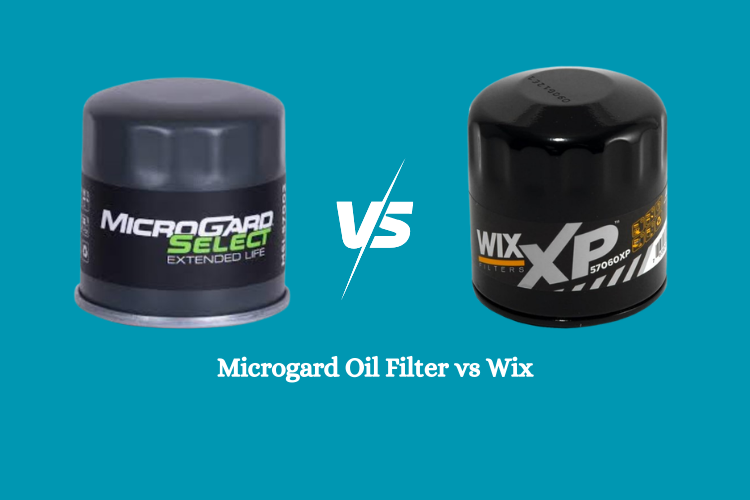
Microgard oil filter vs Wix stands as a common debate among drivers who want strong engine protection without wasting money. Every oil filter plays a key role in trapping dirt, metal particles, and sludge before they harm engine parts.
A weak filter can reduce oil flow and increase wear over time. Strong filtration keeps oil clean and helps engines run smoother for longer miles. Microgard offers budget-friendly options that many drivers find at O’Reilly Auto Parts.
Wix builds a solid reputation for durability, build quality, and high filtration efficiency. Both brands promise reliable performance, yet they differ in media design, construction strength, and long-term value.
Drivers often ask which filter delivers better protection, longer service life, and stronger internal components. This guide breaks down filtration quality, build materials, oil flow, and overall performance so you can decide which brand fits your vehicle and driving style.
Microgard Oil Filter vs Wix Oil Filter
Oil filters play a critical role in engine protection. They trap dirt, metal particles, and other contaminants that build up in engine oil. Clean oil ensures proper lubrication, reduces friction, and prevents engine wear.
Choosing the right oil filter improves engine life, efficiency, and reliability. Microgard and Wix are two popular brands. Both deliver quality, but each targets slightly different needs. This guide breaks down their features, performance, and suitability in depth.
Microgard Oil Filter
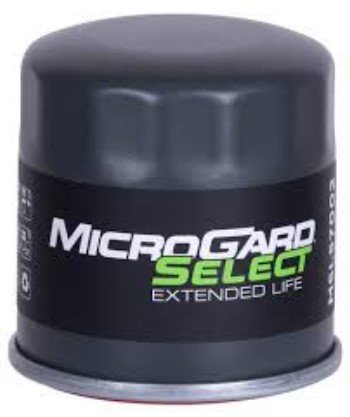
The Microgard MGL57502 is a widely used oil filter known for durability and compatibility. It works with most passenger vehicles and supports standard oil change intervals.
About this Product
The MGL57502 model comes from Microgard, made in the United States. Its steel construction resists pressure and heat from the engine. The inner filtration media captures dirt, small metal fragments, and other contaminants, keeping oil clean.
Its universal design fits many engines, but drivers must check vehicle specs for exact compatibility. Prior users noted “Mustang” on the packaging, emphasizing the importance of checking part numbers.
Features
Durable Steel Housing
The outer shell uses high-quality steel. This allows the filter to handle internal pressure in the engine, which can reach 40–60 psi during normal operation and even higher during high-speed driving.
Efficient Filtration Media
Microgard uses cellulose-based filter media. It captures particles down to 25–30 microns. This is sufficient for standard driving conditions and conventional oils.
Long Lifespan
The filter supports normal oil change intervals of 5,000 to 7,500 miles, depending on vehicle type and oil used.
Wide Vehicle Compatibility
MGL57502 fits many engines, including Ford, Chevrolet, and other mainstream models. Checking specifications ensures proper fit.
What Is the Good?
-
Made in the United States for quality assurance
-
Affordable for budget-conscious drivers
-
Captures dirt and metal effectively for daily driving
-
Easy installation with standard tools
-
Reliable for standard oil change schedules
What Is the Bad?
-
Not ideal for long synthetic oil intervals
-
Less data on advanced filtration efficiency
-
Not optimized for heavy-duty or high-performance engines
Best For
-
Daily city and highway drivers
-
Standard oil change schedules
-
Budget-focused vehicle owners
-
Regular passenger cars with conventional oil
Wix Oil Filter
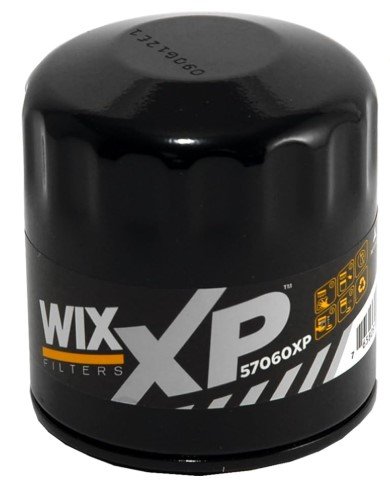
The Wix 57060XP belongs to the XP line, designed specifically for synthetic oils and extreme driving conditions. It is compatible with Buick, Chevrolet, GM, Hummer, Saturn, Saab, Dodge, Chrysler, and Jeep vehicles from 2007–2015.
Product Details
Brand: Wix
Model: 57060XP
Material: Steel
Dimensions: 6.67 x 4.47 x 3.73 inches
Grade: Replacement Part
Customer Rating: 4.7/5 stars (over 3,000 reviews)
Wix builds this filter for performance-focused drivers and synthetic oil users.
Features
Designed for Synthetic Oil
Synthetic oils last longer than conventional oils. They handle high temperatures better and maintain viscosity under stress. The 57060XP is engineered to filter synthetic oil efficiently, supporting longer oil change intervals.
High Filtration Efficiency
This filter uses synthetic-blended media with natural fibers. Wix claims 99% efficiency at 23 microns. That means almost all small particles are trapped, reducing engine wear and contamination.
Extended Oil Change Interval
With synthetic oil, the filter supports up to 20,000-mile intervals under normal driving. Extreme driving may reduce this interval.
Strong Steel Construction
The steel housing withstands vibrations, engine pressure, and temperature fluctuations without deforming or leaking.
Easy Installation
Wix designs this filter for a precise fit. DIY users and professional mechanics can install it quickly.
What Is the Good?
-
Supports high-performance synthetic oil use
-
Efficient filtration of small particles
-
Handles severe driving conditions, including towing and stop-and-go traffic
-
Long oil change interval reduces maintenance frequency
-
Positive customer feedback and reliability
What Is the Bad?
-
Higher cost than standard filters
-
Requires verification for vehicle compatibility
-
Overkill for light daily driving with short oil change intervals
Best For
-
Synthetic oil users
-
Drivers who tow trailers or carry heavy loads
-
Long highway commuting
-
Vehicles exposed to stop-and-go traffic or high engine stress
-
Drivers who want extended oil change intervals
Detailed Comparison for Microgard Oil Filter vs Wix
Both filters are high-quality, but they serve different purposes.
| Feature | Microgard MGL57502 | Wix 57060XP |
|---|---|---|
| Filtration Efficiency | 25–30 microns | 99% at 23 microns |
| Oil Type | Conventional or synthetic | Designed for synthetic oil |
| Oil Change Interval | 5,000–7,500 miles | Up to 20,000 miles |
| Housing Material | Steel | Steel |
| Heavy-Duty Use | Moderate | High |
| Price Level | Budget-friendly | Mid-range |
| Vehicle Compatibility | Many mainstream cars | Buick, Chevrolet, GM, Jeep, Chrysler, etc. |
| Ideal Driving | Daily city/highway | Towing, highway, severe driving |
Microgard focuses on standard driving conditions. It captures dirt effectively but works best for conventional oil or short synthetic oil intervals. Its performance suits everyday city and highway use.
Wix 57060XP targets synthetic oil users who need high filtration under extreme conditions. Its advanced media traps smaller particles and supports longer oil change intervals. Heavy-duty driving, towing, or stop-and-go traffic benefits most from Wix.
Cost is a factor. Microgard is more affordable for standard use. Wix costs more but offers long-term protection and convenience for extended oil intervals.
FAQs
Which filter lasts longer?
Wix 57060XP supports longer oil change intervals, especially with synthetic oils.
Can Microgard handle synthetic oil?
Yes, but only for standard intervals. It does not offer the same high filtration efficiency as Wix XP.
Is Wix overkill for short trips?
For short daily trips with frequent oil changes, Microgard provides sufficient protection.
Which filter is better for towing?
Wix 57060XP is better due to high filtration efficiency and extended interval support.
Do these filters fit all vehicles?
No. Always check part numbers and vehicle specifications before purchase.
Conclusion
Microgard MGL57502 and Wix 57060XP serve different purposes. Microgard suits standard drivers with normal oil change schedules. It is affordable and reliable for city and highway use.
Wix 57060XP targets synthetic oil users, long intervals, and heavy-duty conditions. Its advanced filtration protects engines under severe conditions. Drivers should choose based on oil type, driving style, and maintenance preferences. Daily drivers may prefer Microgard.
Drivers seeking extended intervals and tougher filtration may prefer Wix XP. Both filters provide reliable engine protection when matched with the right vehicle and oil.